

 Image 1 of 2
 Image 2 of 2
THERE’S A NEW CLOWN IN TOWN
Combine painting-acrylic and mixed media with raised texture, and a tin badge.
36 x 24 in. (91.4 x 60.9 cm)
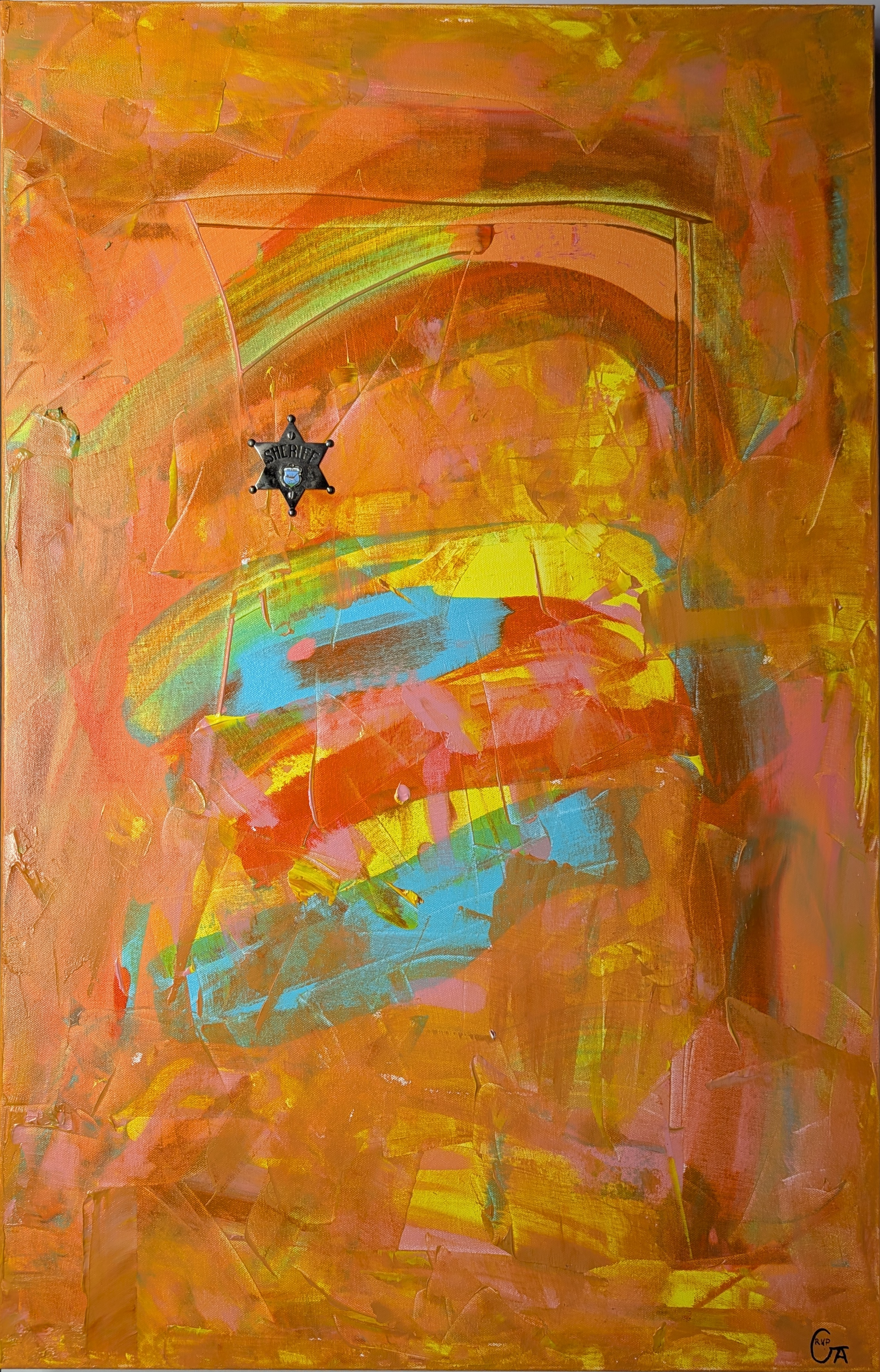
In There's a New Clown in Town, abstraction, symbolism, and social commentary converge to create a work that examines the distinction between genuine authority and its imitation. Dominated by warm oranges, golds, and flashes of vibrant blue, the composition radiates energy and uncertainty, drawing the viewer into a layered visual landscape where meaning emerges gradually through color, texture, and form.
At the center of the composition, a sheriff-style badge appears suspended within an abstract environment, serving as the painting’s symbolic focal point. Rather than functioning as a representation of legitimate law enforcement, the badge is paired conceptually with the title’s reference to a “clown,” creating an allegory for individuals who falsely present themselves as figures of authority. The work alludes to the criminal act of impersonating law enforcement, in which a person adopts the appearance or symbols of official authority without possessing the legal responsibility, training, or legitimacy that such authority requires.
THERE’S A NEW CLOWN IN TOWN
Combine painting-acrylic and mixed media with raised texture, and a tin badge.
36 x 24 in. (91.4 x 60.9 cm)
In There's a New Clown in Town, abstraction, symbolism, and social commentary converge to create a work that examines the distinction between genuine authority and its imitation. Dominated by warm oranges, golds, and flashes of vibrant blue, the composition radiates energy and uncertainty, drawing the viewer into a layered visual landscape where meaning emerges gradually through color, texture, and form.
At the center of the composition, a sheriff-style badge appears suspended within an abstract environment, serving as the painting’s symbolic focal point. Rather than functioning as a representation of legitimate law enforcement, the badge is paired conceptually with the title’s reference to a “clown,” creating an allegory for individuals who falsely present themselves as figures of authority. The work alludes to the criminal act of impersonating law enforcement, in which a person adopts the appearance or symbols of official authority without possessing the legal responsibility, training, or legitimacy that such authority requires.