

Edged Weapons
Click on the painting to view the back and full details.
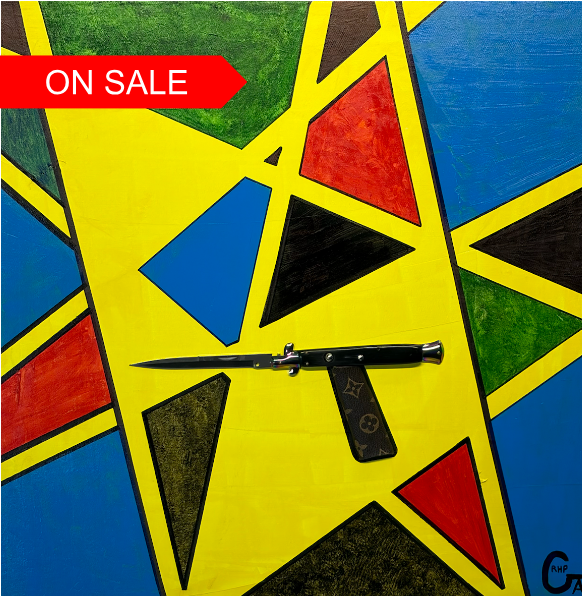
AUTOMATIC STILETTO
Combine painting-acrylic and mixed media utilizing affixed knife and consumerism reference.
24 x 24 in. (60.9 x 60.9 cm)
Incorporating a modern switchblade knife affixed directly to the painted surface, Automatic Stiletto functions as both a physical object and compositional anchor. Positioned horizontally across the lower portion of the composition, the knife is set against a field of sharply divided geometric color planes. The use of yellow dominating the central ground, intersected by red, blue, green, and black shapes outlined in bold black lines create a dynamic backdrop that emphasizes the clean, linear precision of the knife. The object is presented in a direct, almost catalog-like manner, allowing attention to rest on its form, material, and construction while remaining integrated within the broader visual structure of the painting.
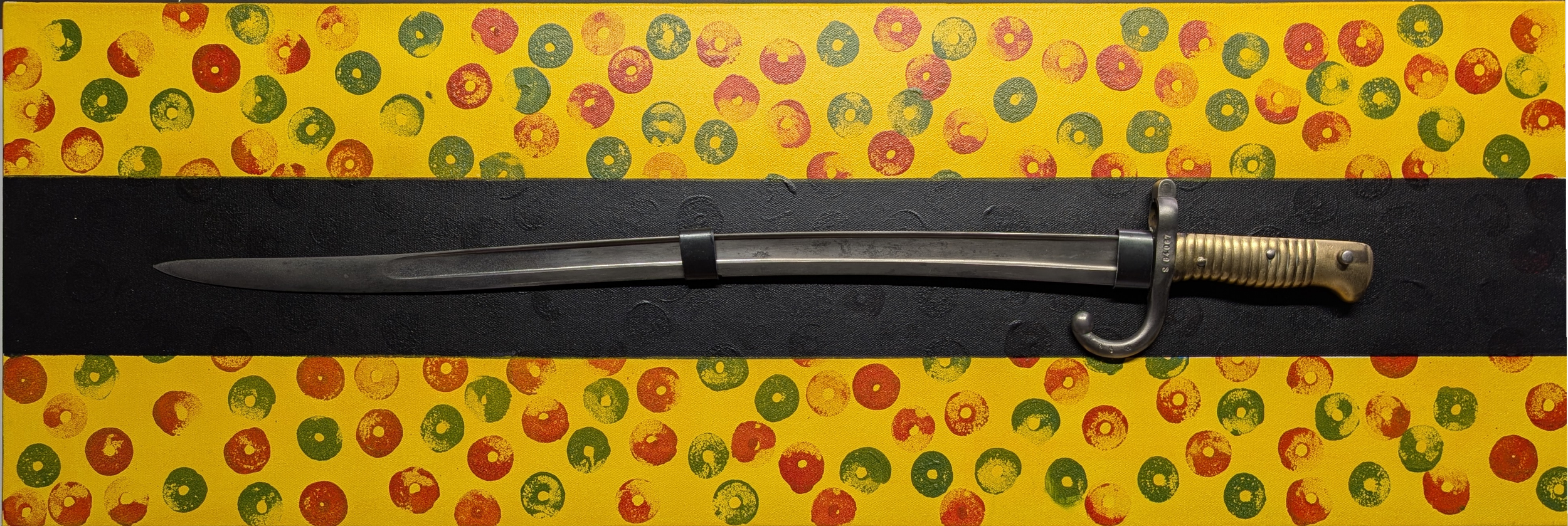
1873 FRENCH BAYONET
Combine painting-acrylic and mixed media with an authentic engraved 1873 French Bayonet
36 x 12 in. (91.4 x 30.5 cm)
Serving as a tribute to those who lost their lives in war, a mounted 19th-century French yataghan bayonet bisects the composition with a quiet authority, its curved steel blade suspended across a stark horizontal band of matte black. The weapon—an object of precision, ritual, and violence—is rendered not as an instrument in motion, but as an artifact held in stasis, elevated and isolated from its original context.
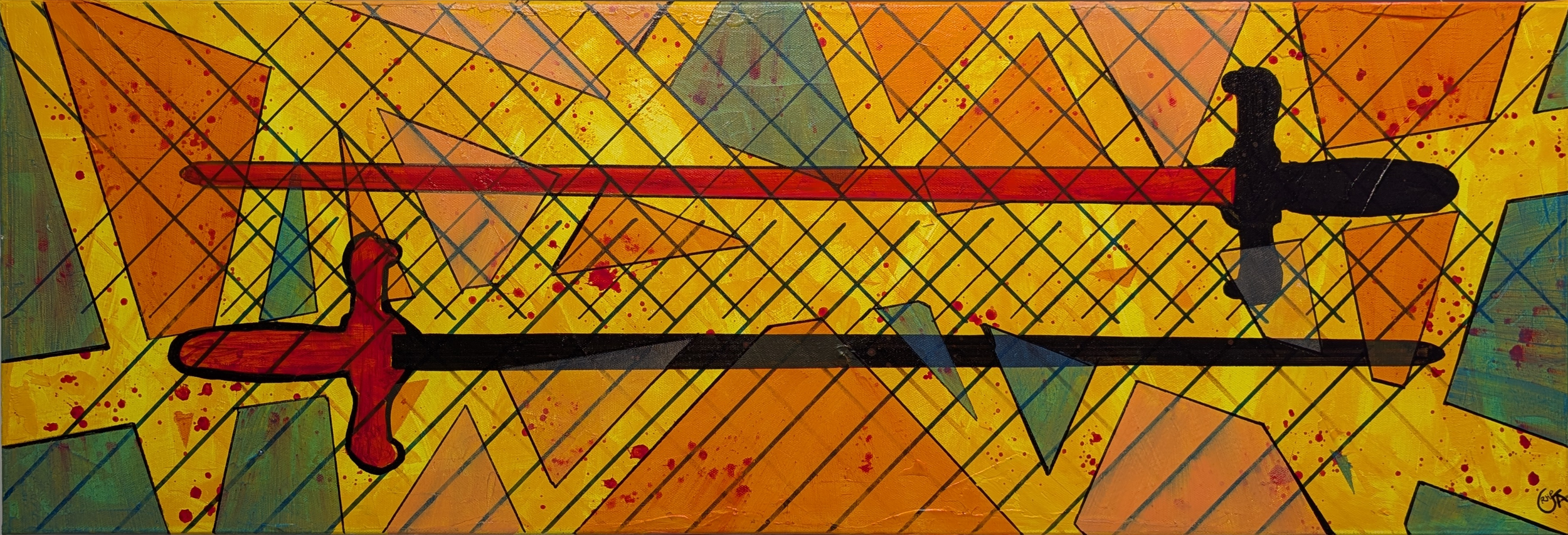
PEACE
Combine painting-acrylic and mixed media with elements of pop art.
36 × 12 in. (91.4 × 30.5 cm)
Peace presents a striking visual paradox, placing two swords in quiet opposition while inviting the viewer to consider the delicate balance between conflict and restraint. The bold horizontal composition evokes symmetry and stability, while the intersecting geometric network behind the blades suggests the countless paths history, ideology, and human choice may take.
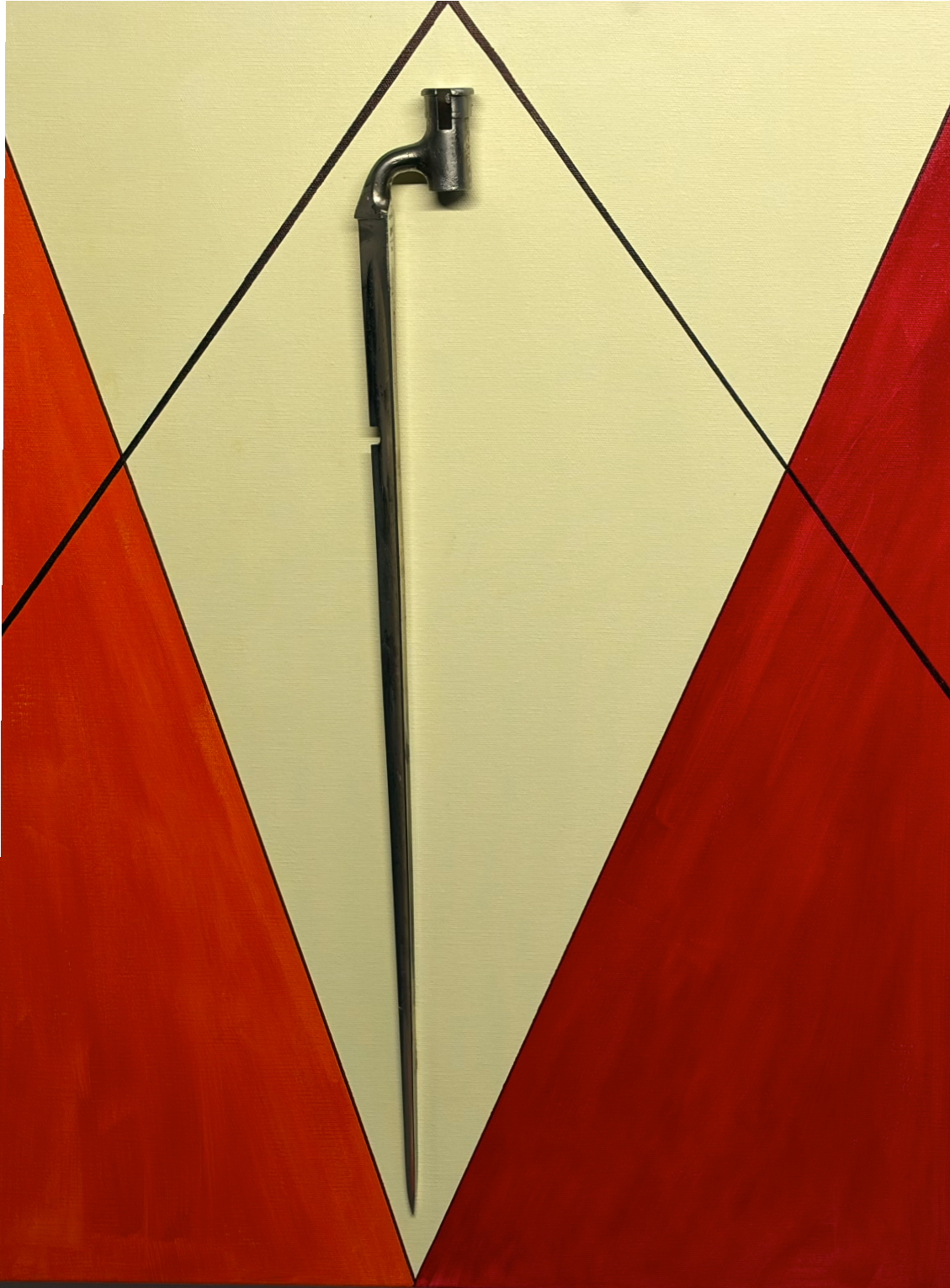
BROWN BESS BAYONET
Combine painting-acrylic and mixed media with mounted historical bayonet
28 x 22 in. (71.1 x 55.9 cm)
The object depicted is a Brown Bess bayonet, historically associated with the British Army’s “Brown Bess” musket, widely used from the early 18th through the early 19th century, including during the American Revolutionary War and the Napoleonic Wars. As a utilitarian extension of the firearm, the bayonet transformed ranged weaponry into close-combat instruments, symbolizing a shift between distance and immediacy in warfare. Its elongated, triangular form was engineered for durability and penetration, and has since become an emblem of both military standardization and the brutal intimacy of hand-to-hand combat.
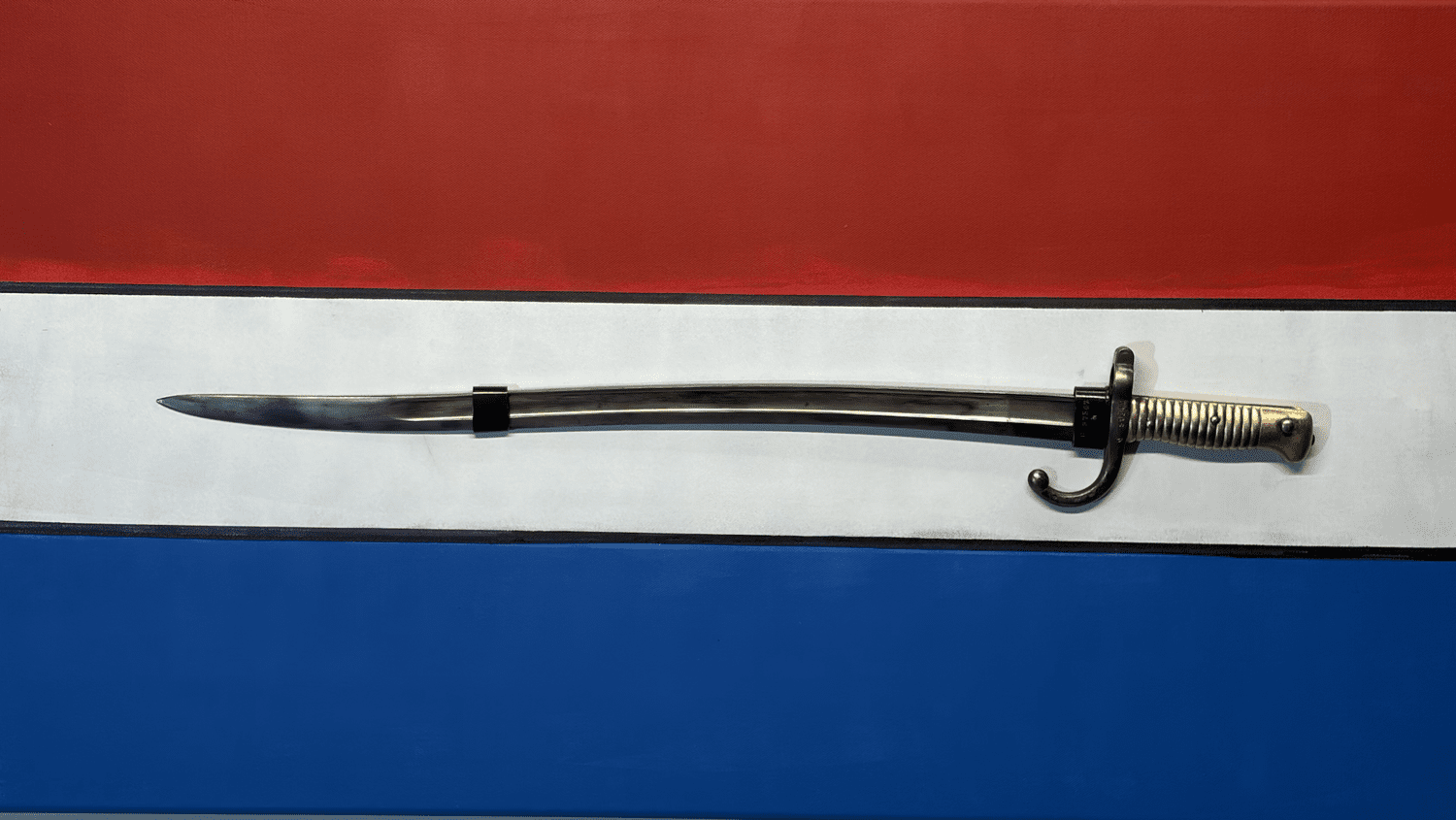
1874 FRENCH BAYONET
Combine painting-acrylic and mixed media with authentic 1874 French Bayonet.
36 x 24 in. (91.4 x 60.9 cm)
A reflective composition, while appearing direct, serves as a tribute to those who lost their lives in war. The Manufacture d'Armes de Saint-Étienne 1874 bayonet is a French sword bayonet designed for the 11mm Fusil Gras Modèle 1874 rifle. Featuring a distinctive 20.5-inch T-back blade, brass hilt, and hooked quillon, these were produced at state arsenals (Saint-Étienne) from the mid-1870s to the 1880s.
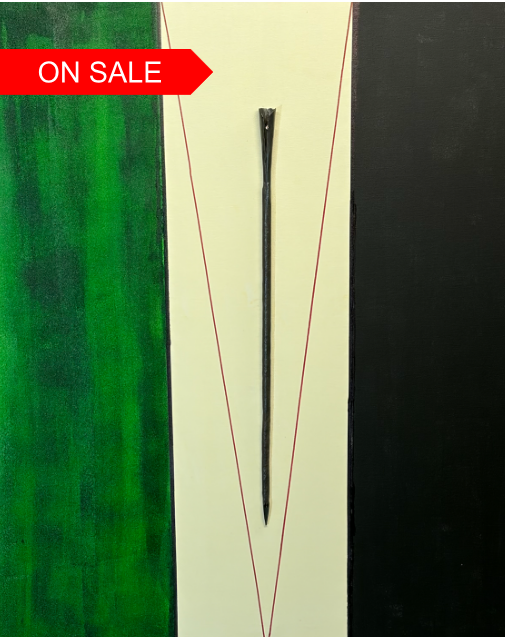
AFRICAN SPEAR TIP
Robert Phaneuf
Combine painting-acrylic and mixed media, displaying an affixed primitive hunting spear.
30 x 24 in. (76.2 x 60.9 cm)
Positioned along a central axis within the composition, bordered by two thin, red converging lines that frame it symmetrically. The surrounding quadrilateral planes: green to the left, black to the right, and a light-toned central bands serve to reference the Pan-African color triad, most commonly associated wit Kenya’s Kitui County’s flag. This chromatic structure provides a contextual backdrop without interrupting the object’s prominence, instead reinforcing a cultural and geographic association .
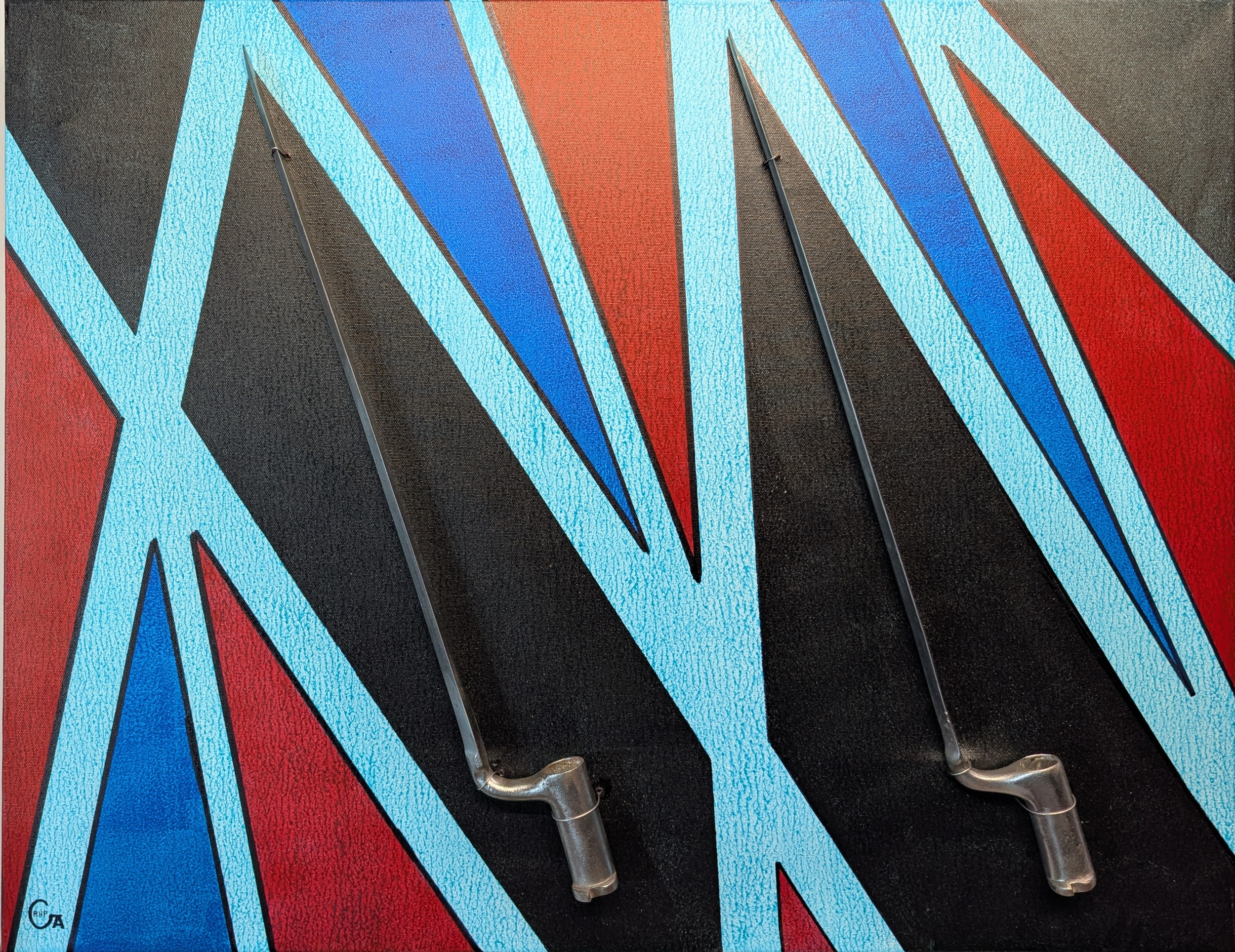
REVOLUTIONARY WAR BAYONETS
Combine painting-acrylic and mixed media with a mounted pair of American socket bayonets (circa 1776).
30 x 24 in. (76.2 x 61 cm)
American socket bayonets friction fit over the barrel of the rifle. Many of them fit civilian hunting guns which were repurposed for military use. Hand forged during the period of the Revolutionary War, blacksmiths risked "committing treason” during the time they were making them. A rare find, these bayonets are of museum quality. These weapons were integral in the history of our country’s founding (Revolutionary War).